How to choose your Career
or Job Security and the Job-Experience Curve
By Beracah Yankama
Director, StudentsReviewWhen people are trying to pick a career, the first thing that comes to
mind is
salary.
How can I make as much money as soon as possible?
. This
is generally a pretty rational thought, after all most people have large loans
to pay off. People then run in a frenzy towards engineering, computer science,
and IT type jobs—the starting salary is great. Who doesn't want make
$60K+ right at graduation? When you're making that kind of money and single, who
cares about
job security?
Young adults hear things like job security and think that it is an "old people" or
"stagnant people" problem. I certainly thought that when I was at the career
choosing age. But I did not understand what job security actually was.
Keeping your job for 30 years is not a job security associated
with your career choice, but with the people & company with whom you work. The kind of security I am talking about is
job
experience security—being able to find a new job easily after you lose
your existing job (company goes out of business, you quit, etc.) because your experience has value.
The Job Experience curve describes the increasing value that your experience has to a company and the market overall. For
example, your value as a worker (which includes both your experience at your particular
skill-set, the risk of hiring and training someone new, and a variety of other factors)
should increase each day that you are on the job.
Let's make it concrete.
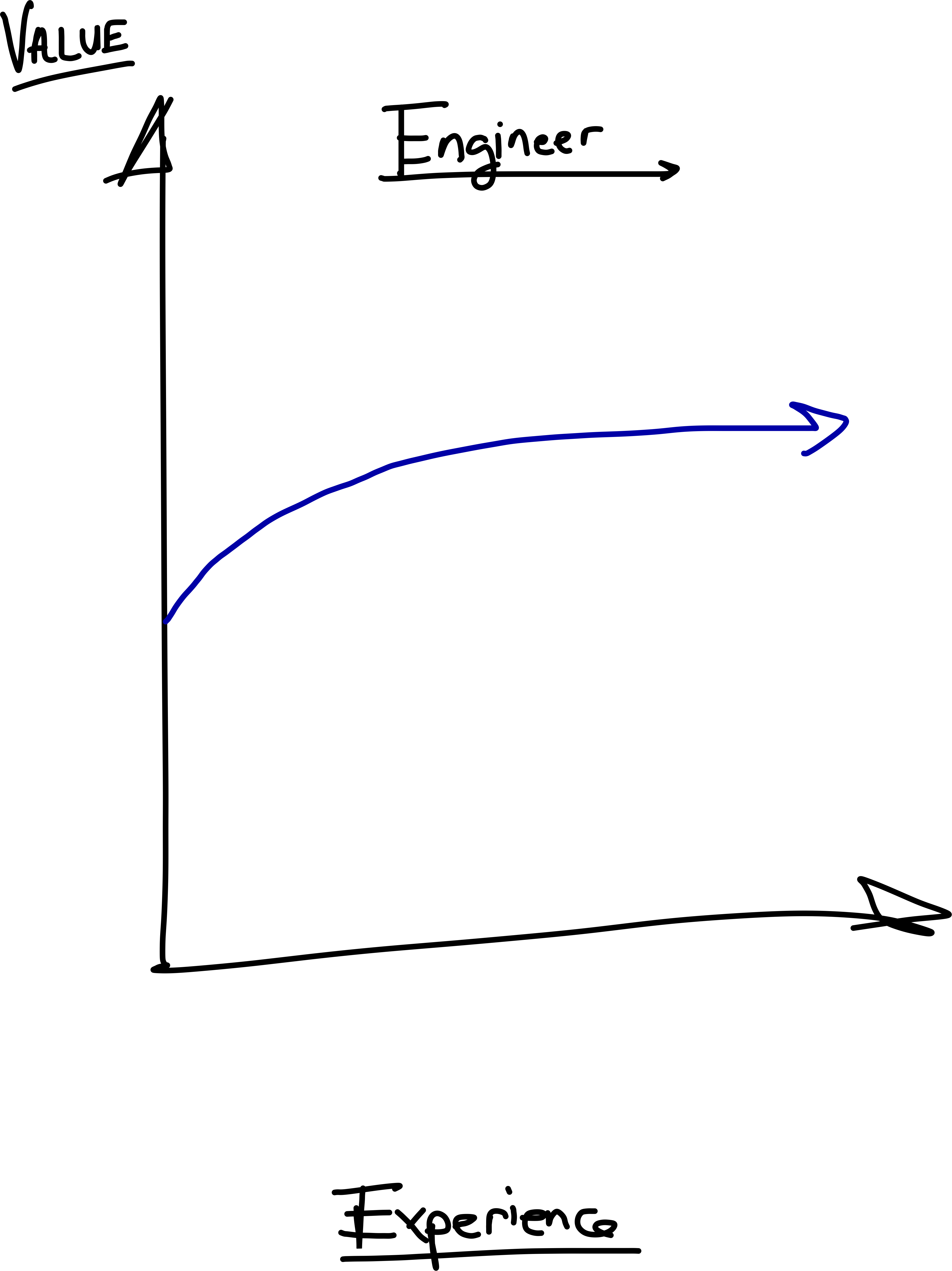
Despite that people flock to engineering for its high starting salary, many do not realize is that in the long
run the job-experience curve for most engineering fields is FLAT. Companies and the market do not value your
increasing experience (for a variety of reasons) over your existing
skillset. After 5 or so years, the cost of maintaining you as an employee exceeds the
cost of hiring a new graduate. The new graduate has updated skills, and from the management's eyes, only marginally different
experience value.
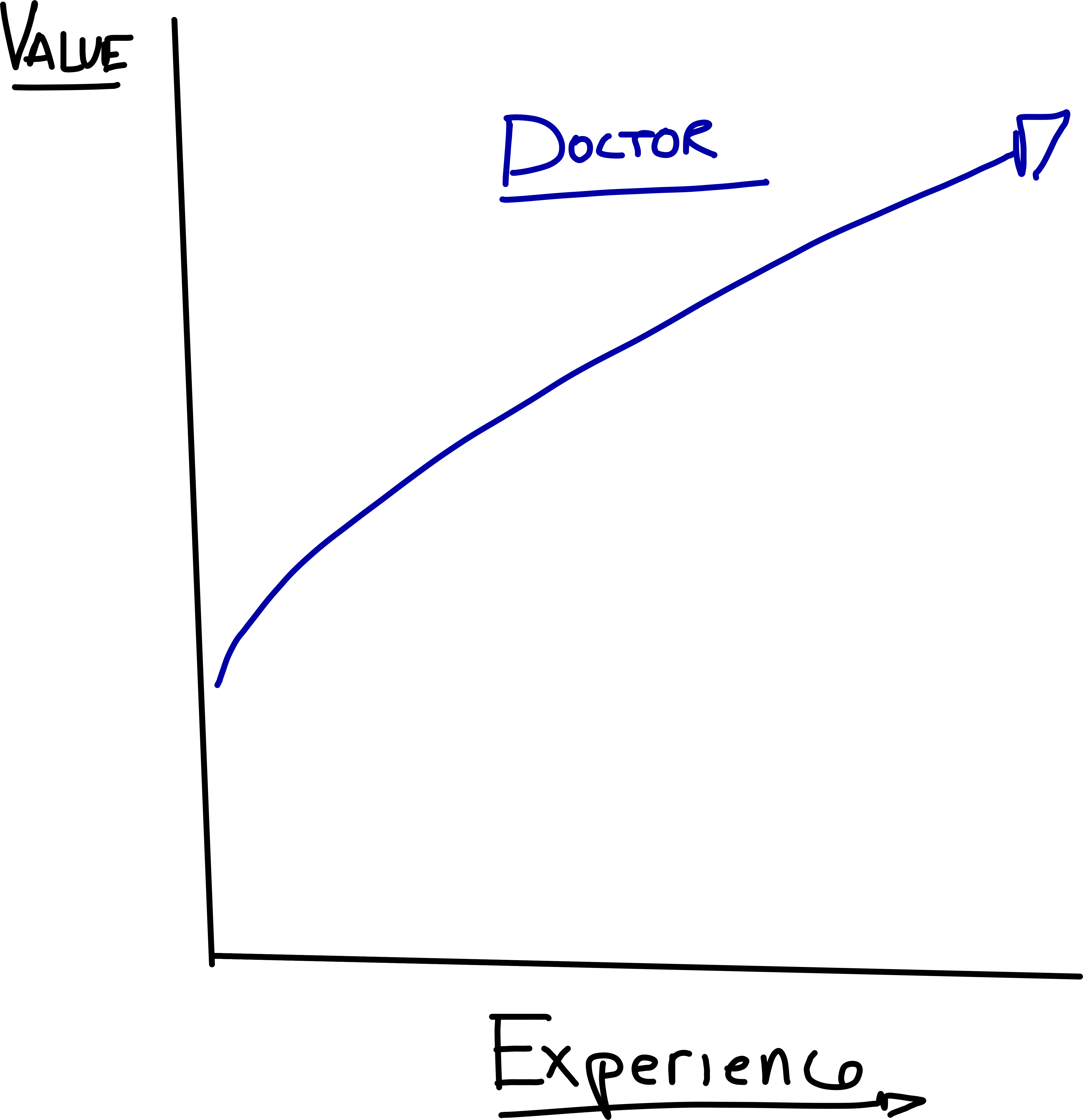
Contrast that with the opposite extreme: Doctors, for instance, have
job security because people are always in need of them. But what is overlooked is that in every
year practicing, the doctor gains
experience—experience which is irreplaceable. Whether that
is experience with medical conditions specific to a location, or with surgical proceedures, that experience
is invaluable and non-replaceable. Ultimately, that experience is what becomes valued, not the years of
medical school.
People tend to see high starting salaries for a field and think, "this field is in demand". But
it could also be the case that there is demand because the experience is not valued and the
workers are replaced quickly.
Now we've considered two very popular fields, Engineering and Medicine for the job security that
comes with increasing experience. In looking at careers you are interested in, keep an eye
out for the turnover (hire/fire) rate in the market—try to see it as whether the experience is
valued.
Skills are great, and they get you high starting salaries, but at the end of the day, skills
are replaceable—experience is not.